The Inspiring story of St Helena’s Millennium Forest
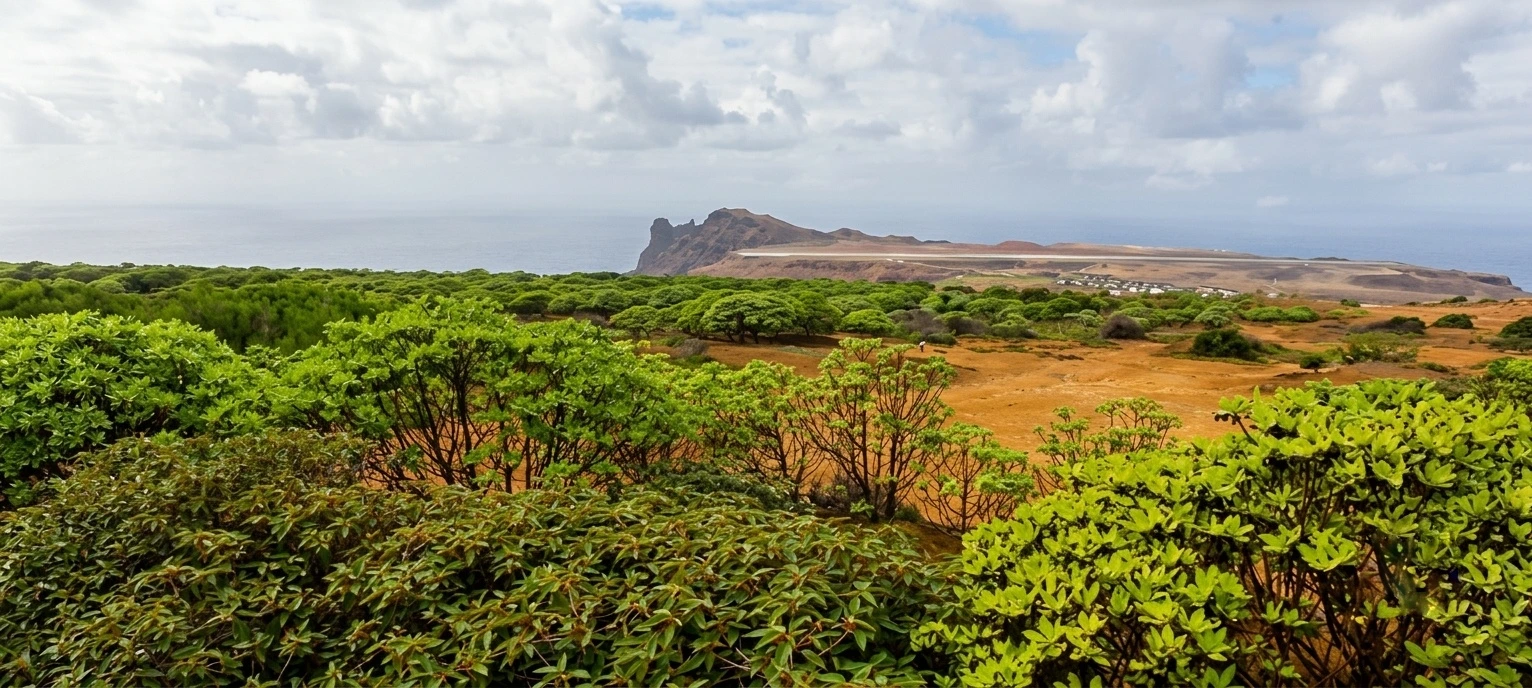
High on the breezy, elevated hills of eastern Longwood sits one of St Helena’s most inspiring conservation achievements: the Millennium Forest. Spanning dozens of hectares of woodland, this remarkable site represents a story of community spirit, environmental restoration, and hope for our island’s unique endemic wildlife.
Recovering the Great Wood: The History Behind the Forest
When English colonisers arrived on St Helena in 1659, this windward coastal plain was covered by “the Great Wood” – a dense, ancient forest stretching over 20 square kilometres, predominantly formed by the endemic St Helena Gumwood (Commidendrum robustum).
Tragically, human arrival disrupted an ecosystem that had evolved over millions of years. Early settlers rapidly cleared trees for timber, firewood, and tanning bark. At the same time, introduced animals, like goats, grazed heavily on young saplings, preventing natural regeneration. By 1710, local records noted that the Great Wood was virtually gone.
For nearly three centuries, the plain lay barren as a semi-desert landscape. Severe soil erosion followed, with ecologists estimating that up to 90% of the area’s fertile topsoil was lost to strong south-easterly winds.
The Road to 4th August 2000
In the late 1990s, the local community decided to take action and embark upon an ambitious reforestation initiative on the historic site of the Great Wood. Designated as the Millennium Forest, the project officially launched in 2000 under a dedicated steering committee backed by tremendous island-wide commitment.
A pivotal milestone came on 4th August 2000, when Governor David Hollamby planted the very first official Gumwood tree, dedicated to HRH Elizabeth, the Queen Mother, on her 100th birthday. Immediately following, schoolchildren from Jamestown First School and local community groups joined in to plant the first wave of saplings.
Just two days later, on 6th August, the site opened for island-wide public planting days. Virtually every resident on St Helena contributed by planting a tree. By December 2000 – in just five months – the community had established nearly 4,000 trees, laid out a car park, and built the initial gatehouse.
Today, the Millennium Forest project covers 250 hectares designated for ongoing restoration, proudly managed and cared for by the St Helena National Trust.
What the Forest Looks Like Today
Where there was once barren earth, visitors today will discover a thriving green sanctuary home to thousands of native trees and rare wildlife. Dense groves of St Helena Gumwood grow alongside critically endangered endemics, including the Dwarf Ebony (Trochetiopsis ebenus) and Boxwood.
The expanding canopy provides safe nesting grounds for St Helena’s iconic national bird, the Wirebird (Charadrius sanctaehelenae), alongside rare endemic invertebrates like the Gumwood leafhopper. Visitors can explore gentle walking paths that weave past an onsite plant nursery, educational display boards, and a welcoming gatehouse showcasing dedication plaques from supporters around the globe.
Plant Your Own Tree When Visiting St Helena
One of the most rewarding experiences for visitors is the opportunity to directly contribute to this living legacy. During your stay, you can tour the Millennium Forest, explore the nursery, and plant your very own endemic Gumwood sapling. You will receive a personalised certificate of planting and leave a lasting, positive footprint on our island for generations to come.
Plan Your Island Experience with Saint Travel Ltd
Whether you want to dedicate a tree at the Millennium Forest, explore St Helena’s rich historic sites, or discover our scenic walking trails, Saint Travel Ltd is here to help you experience the best of the island. We specialise in crafting bespoke, tailored itineraries, booking local accommodations, arranging vehicle rentals, and organising hassle-free transfers.
Contact us today to start planning your unforgettable journey to St Helena Island!